Moroccan couscous
Moroccan couscous is more than just a meal; it’s a dish steeped in history, community, and tradition. Made from semolina wheat, couscous has been a staple in North Africa for centuries, with its origins linked to the Berber people. Archaeological evidence, including cooking tools found in Morocco, suggests that this culinary tradition dates back to at least the 3rd century BC.
Couscous is more than just a meal; it’s a cherished cultural emblem, especially on Fridays. This is a special day in Moroccan households, a day of prayer and coming together. Families return from the mosque to share a single, steaming platter of couscous, a tradition that perfectly embodies hospitality and community. This shared heritage is so significant that UNESCO recognized couscous as a culinary treasure of the Maghreb region.
The secret to true Moroccan couscous lies in its texture—it’s incredibly light, airy, and infused with the rich flavors of the stew it’s cooked with. Traditionally, it’s a labor of love, prepared by hand and steamed multiple times in a special two-tiered pot called a couscoussier. The semolina steams gently in the top pot, absorbing all the aromatic goodness from the simmering stew below.
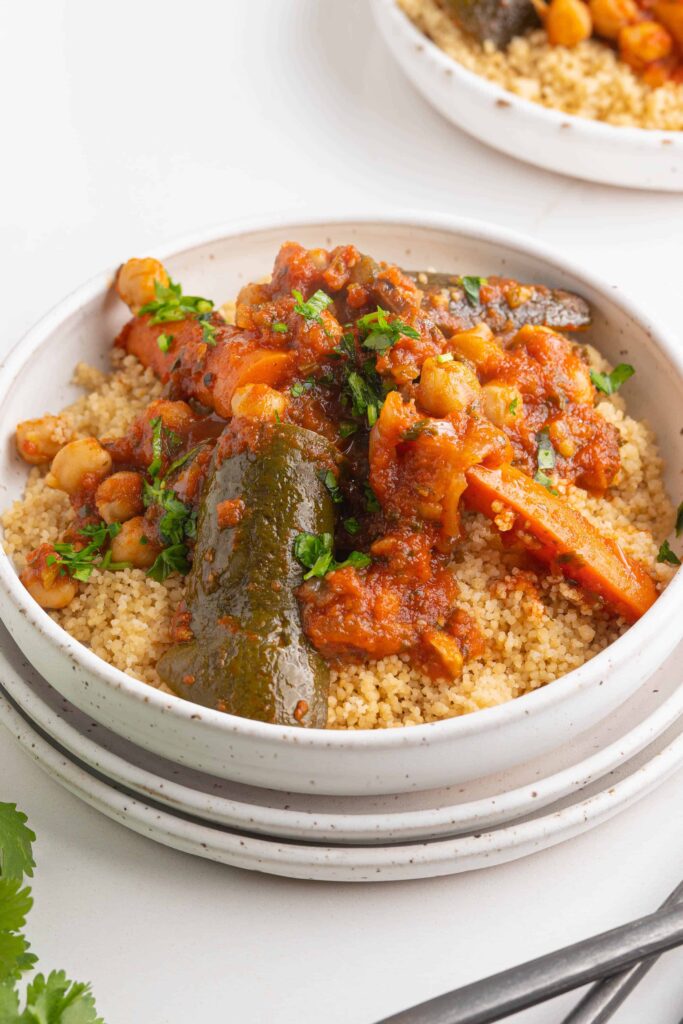
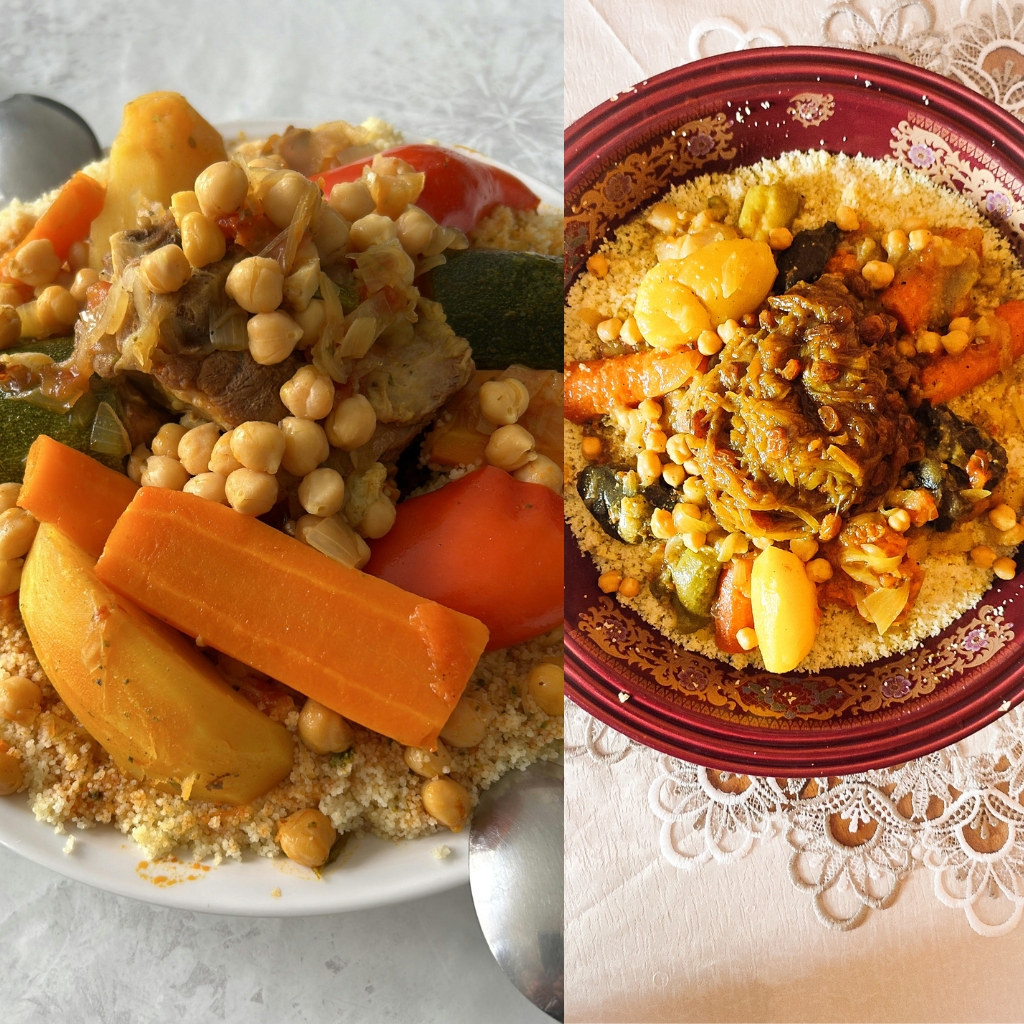
What makes Moroccan couscous so special is its incredible texture—it’s light, fluffy, and full of flavor. The key is in the preparation. The traditional way is to steam it by hand, using a special pot called a couscoussier. It’s a two-part pot: the couscous steams on top while a delicious stew simmers below. You have to steam it at least two, or even three, times. The trick is to fluff the grains really well between each round so they don’t get sticky and stay perfectly separate.
So, what goes into a traditional Moroccan couscous?
When we talk about a classic Moroccan couscous, it’s not just about the grains and vegetables—it’s the spices that truly bring it to life. Here’s a quick look at the key flavors:
Savory Couscous
Spices: The stew is typically seasoned with a warm and aromatic blend, including cumin, cinnamon, turmeric, ginger, and saffron.
Herbs: Fresh herbs are a must! You’ll often find a bouquet of parsley or coriander tied together and simmered in the stew to add a bright, fresh flavor.
Sweet Couscous (Like Seffa)
For celebratory versions, a sweet twist is often added. These dishes are a treat, and usually include:
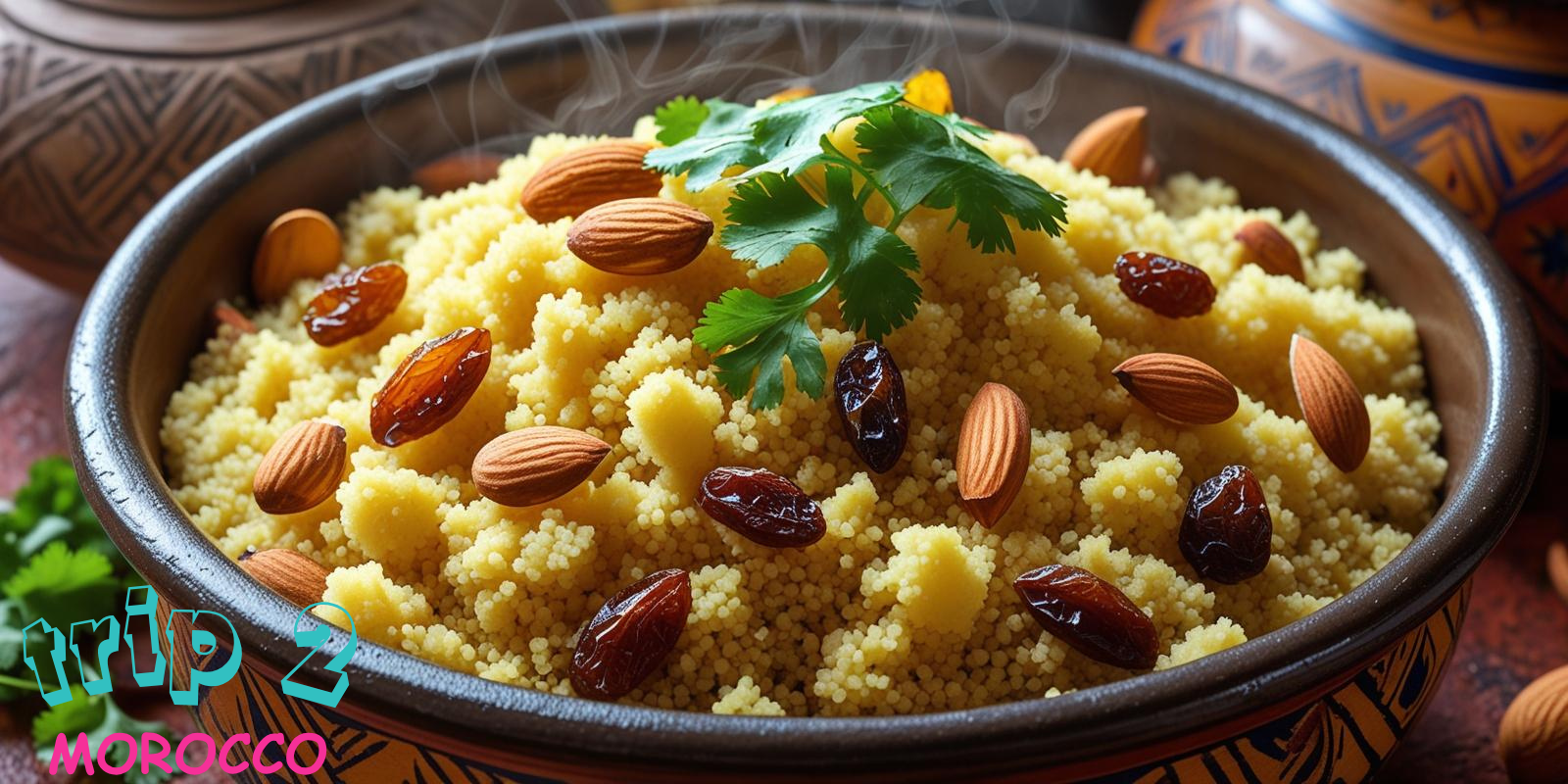
Raisins
Caramelized Onions (Tfaya)
Toasted Almonds
Cinnamon
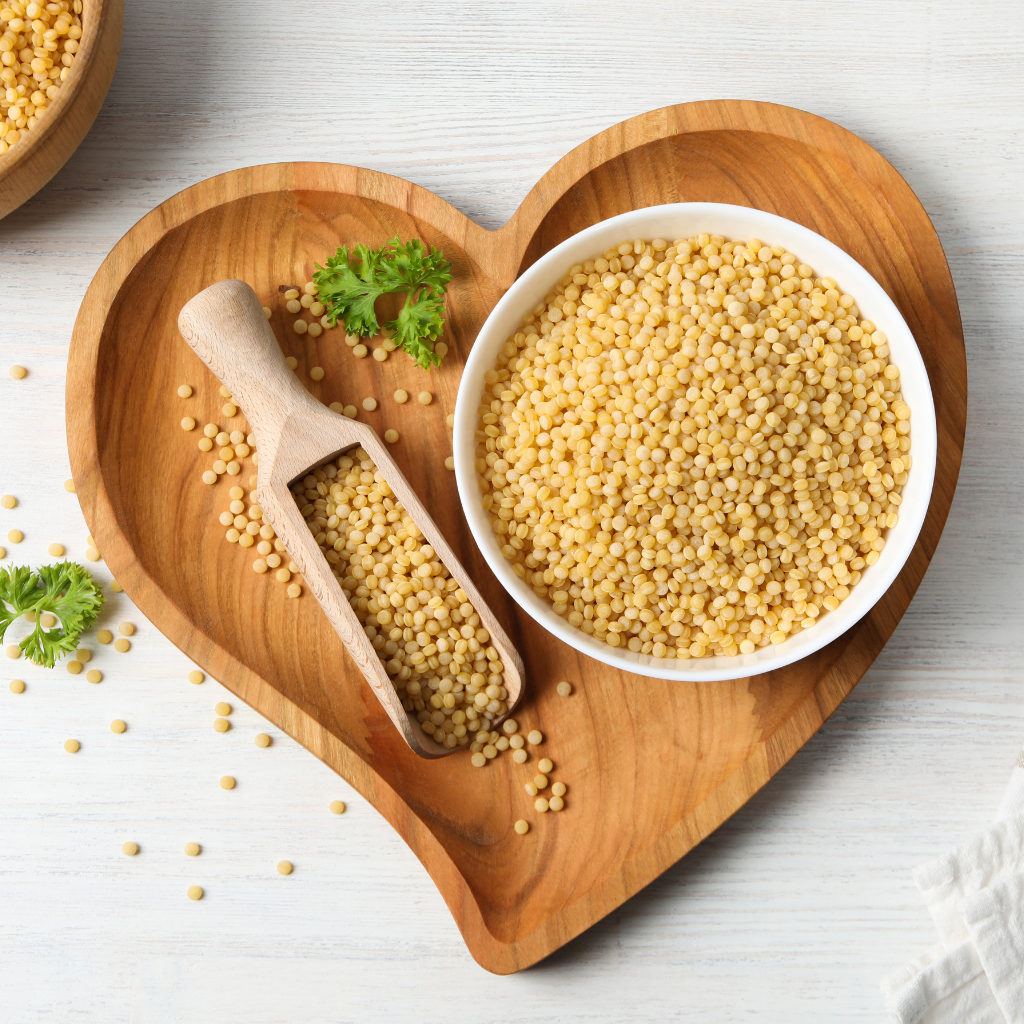
Beyond its incredible flavors, couscous is a powerful symbol of abundance and togetherness. In Moroccan homes, it’s traditionally served on large communal platters, with everyone gathered around to share from the same dish. This isn’t just about food; it’s a profound gesture of unity and tradition. Eating with the right hand from a shared plate fosters a special sense of closeness, warmth, and celebration that is central to Moroccan culture.
Nutritious & Versatile
Couscous isn’t just delicious; it’s also packed with nutrients. The semolina it’s made from provides a good dose of carbohydrates, fiber, protein, selenium, and B vitamins. If you opt for whole-wheat couscous, you get an even bigger boost of fiber and other essential nutrients.
But its appeal also comes from its incredible versatility. Couscous makes a fantastic base for so many dishes—from savory stews and vibrant salads to sweet, celebratory meals. While instant versions are convenient, nothing compares to the light, fluffy texture and rich aroma of couscous prepared the traditional way.
🍲 Couscous Moroccan — The Authentic Taste of Morocco
Step into the heart of Moroccan cuisine with this beautifully crafted ebook dedicated to couscous, the country’s most iconic and beloved dish. From traditional Friday family meals to festive celebrations, couscous is more than food — it’s a symbol of culture, hospitality, and togetherness.
Inside, you’ll discover:
🌿 Authentic Recipes — Step-by-step guides to classic couscous with lamb, chicken, vegetables, or seafood.
🥘 Regional Variations — Learn how couscous changes from Marrakech to Fez to the Berber mountains.
🍋 Secret Techniques — Tips for steaming, spicing, and serving couscous like a true Moroccan chef.
🕌 Cultural Insights — The history and traditions behind Morocco’s favorite dish.
Whether you’re a food lover, a travel enthusiast, or simply curious about authentic Moroccan flavors, this ebook will take you on a journey straight to the souks and kitchens of Morocco.
👉 Don’t miss your chance to bring Morocco to your table.
✨ Click here to get your copy now!
🌍 World’s Best Foods List (with Moroccan Food)
🇲🇦 Moroccan & North African Dishes
Couscous – Steamed semolina with vegetables, chickpeas, and meat (traditional Friday dish).
Tagine – Slow-cooked stew made in a clay pot (chicken with lemon & olives, lamb with prunes, etc.).
Pastilla – Sweet and savory pie made with chicken or pigeon, almonds, and spices wrapped in thin pastry.
Harira – A hearty soup with lentils, chickpeas, tomatoes, and meat (especially eaten during Ramadan).
Mechoui – Whole lamb roasted with spices.
Rfissa – Chicken and lentils served over shredded flatbread with fenugreek and spices.
Zaalouk – Cooked eggplant and tomato salad with olive oil, garlic, and spices.
Briouats – Fried or baked pastries filled with meat or cheese.
Khobz – Traditional round Moroccan bread.
Strong green tea with fresh mint and lots of sugar (Morocco’s national drink).
In essence: this guide reframes Morocco as more than a tourist hotspot — it’s a living example of how green entrepreneurship and cultural heritage can create meaningful, sustainable journeys.